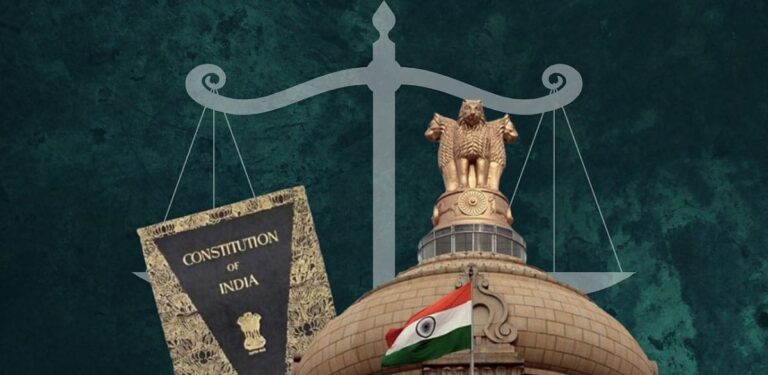
What is the Indian Constitution? 2026 Official Guide, Structure, and Exam Significance
The Indian Constitution is the supreme law of the land, acting as the bedrock for India’s democracy. It defines the government’s powers, protects fundamental citizen rights, and remains the world’s longest written constitution—a living, evolving document that every Indian citizen and competitive exam aspirant must understand.
What is the Indian Constitution? A 2026 Overview
Think of the Indian Constitution not just as a dusty book of laws, but as the "rulebook" for the largest democracy on the planet. It dictates how the nation is governed, how laws are created, and where the boundaries of authority lie.
As of 2026, the document remains a dynamic framework. It balances a federal structure—where power is shared between the Center and the States—with strong unitary features that keep the nation unified. It is the ultimate legal authority. When a conflict arises between a statute and the Constitution, the Constitution wins. Every single time.
Quick Fact Sheet: The Constitution in 2026
- The Blueprint: Adopted on November 26, 1949; officially effective from January 26, 1950.
- The Scale: It currently holds 470 articles, organized into 25 distinct parts, supported by 12 schedules.
- The Evolution: With 106 amendments to date, the document is frequently updated to reflect modern social and legal requirements.
- The Watchdog: The Supreme Court of India serves as the final interpreter, ensuring that no law violates the "Basic Structure" of this foundational text.
Latest Updates on the Indian Constitution: 2026 Official Status
For those tracking the legal landscape or preparing for high-stakes government exams like the UPSC or state PSCs, keeping up with the Constitution is a full-time job. It is not just about history; it is about how the country functions today.
The Legislative Department of the Government of India is the primary source for all authentic updates. Whether it is a new Bill moving through Parliament or a landmark Supreme Court verdict that shifts how we interpret Article 21, the legal landscape is always in motion.
Official Resource: For the most accurate, up-to-date version of the text, always refer to the official portal of the Legislative Department. Relying on third-party summaries for legal research is a common mistake; for exams, official government sources are your only safety net.
- Monitoring Amendments: Parliamentary actions change the legal fabric of India annually. Aspirants should prioritize tracking notifications from the Legislative Department to see which new Bills might alter existing constitutional articles.
Related Update: DSSSB Section Officer Horticulture Recruitment 2026: Status Update on Vacancies, Exam Schedule, and Eligibility
Understanding the Core Pillars: What You Must Know
The genius of the Indian Constitution lies in its balance. It doesn't just give the government power; it places strict limitations on that power to protect the individual.
1. Fundamental Rights (Part III: Articles 12–35)
These are the non-negotiables. From the Right to Equality to the Right to Freedom of Speech, these rights are justiciable. If the state infringes upon them, you can head straight to the High Court or Supreme Court.
2. Directive Principles of State Policy (Part IV: Articles 36–51)
These are the "goals" of the state. They aren't enforceable in court like Fundamental Rights, but they act as a moral compass for the government when drafting laws regarding social welfare and economic justice.
3. Fundamental Duties (Part IV-A: Article 51A)
While rights are what we get, duties are what we owe. These moral obligations remind citizens of their role in maintaining the integrity, sovereignty, and harmony of the nation.
Exam Pattern & Syllabus: 2026 High-Yield Topics
If you are preparing for a competitive exam, stop trying to memorize every single word. Focus on the "High-Yield" areas that examiners love to test.
| Syllabus Section | Focus Area for 2026 |
|---|---|
| Historical Evolution | Focus on the Cabinet Mission Plan and the role of the Drafting Committee. |
| The Preamble | Know the key terms: Sovereign, Socialist, Secular, Democratic, Republic. |
| Executive Powers | Distinguish clearly between the roles of the President and the Prime Minister. |
| The Judiciary | Understand "Writ Jurisdiction" and the concept of "Judicial Review." |
| Amendment Process | Focus on Article 368 and the different types of majorities required. |
Related Update: Delhi Forest Guard Exam Date 2026: Official CBT Schedule Released for 52 Posts
Strategic Guide: How to Master the Constitution
You don't need a law degree to understand the Constitution, but you do need a strategy. Here is how the toppers do it.
Step 1: Start with the Preamble
The Preamble is the "Identity Card" of the Constitution. If you understand the Preamble, you understand the vision of the founding fathers. It sets the tone for everything that follows.
Step 2: Quality Over Quantity
Don't get bogged down in all 470 articles. Focus on the ones that appear in the news. If there is a debate on federalism, look at the Seventh Schedule (Union, State, and Concurrent Lists). If there is a debate on privacy, look at Article 21.
Step 3: Link Law to Current Events
The Constitution is alive. When the Supreme Court makes a ruling on the "Basic Structure" doctrine, that is a goldmine for exam questions. Always link your static knowledge (the text) with dynamic events (the news).
Step 4: Use the Right Tools
- Official Portals: sci.gov.in and legislative.gov.in.
- Standard Texts: Indian Polity by M. Laxmikanth is widely considered the "Bible" for these exams. Use it as your primary reference.
Career Paths: Why This Knowledge Matters
Mastering constitutional law isn't just for law students. It is a gateway to some of the most prestigious careers in India.
- Judicial Services: As a Judicial Officer, you are the protector of the Constitution. Starting pay scales under the 7th Pay Commission offer high financial security and immense social prestige.
- Administrative Services (IAS/PCS): An administrator’s primary job is to implement policy within the bounds of the Constitution. Understanding this document is the difference between a good bureaucrat and a great one.
- Policy Advisors: With the rise of complex tech and social laws, the demand for experts who can bridge the gap between constitutional mandates and modern policy is at an all-time high.
Must Read: UP Board 10th and 12th Result 2026 Out: Toppers List, Direct Link, and Pass Percentage Declared
Important Dates for Your Calendar
Keep these dates marked. They aren't just holidays; they are the pillars of our national identity.
- November 26 (Constitution Day/Samvidhan Diwas): This is the day the Constitution was adopted. It’s a day for national reflection on our duties as citizens.
- January 26 (Republic Day): The day our Constitution came into force. It marks the transition of India into a full-fledged Republic.
Expert Preparation Tips for 2026
The 2026 exam cycle is shifting toward "application-based" questions. It’s no longer enough to know what an article says; you need to know how it applies to real-world scenarios.
- Master the "Basic Structure": This is the most frequently tested concept. Understand the Kesavananda Bharati case inside and out.
- Federal Interaction: Spend extra time on the Seventh Schedule. Questions about how the Union and States divide powers are appearing more frequently in current exams.
- Stay Current: The legal landscape is shifting. Whether it’s electoral reform or changes to parliamentary procedure, keep an eye on the news. If it hits the headlines, it’s likely to hit your question paper.
Related Update: UP Home Guard Bharti 2026 Exam Today: Live Updates, Shift Timings, and Exam Guidelines for 41,424 Posts
Frequently Asked Questions (FAQs)
Q: Is the Indian Constitution too rigid to change?
A: Not at all. It is often described as a blend of "rigidity and flexibility." Some parts are easy to amend with a simple majority, while others require a much more rigorous process involving the states. This ensures the document remains stable yet adaptable.
Q: What is the importance of the 106th Amendment?
A: This amendment is a major talking point in 2026. Always check the official Legislative Department summary to understand how it impacts current representation and legal standards.
Q: Where can I download the official text?
A: Avoid unofficial PDFs. Head straight to the official Legislative Department website for the most accurate, authentic version.
The Bottom Line:
The Indian Constitution is the heartbeat of our democracy. Whether you are studying for a competitive exam or simply want to understand your rights as a citizen, this document is your starting point. It’s a massive, complex, and beautiful framework that defines who we are as a nation.
What do you think? With the pace of modern change, should the Constitution be amended more frequently to keep up with the digital age, or does its stability provide the necessary foundation for a diverse country like India? Let us know your thoughts below.