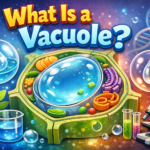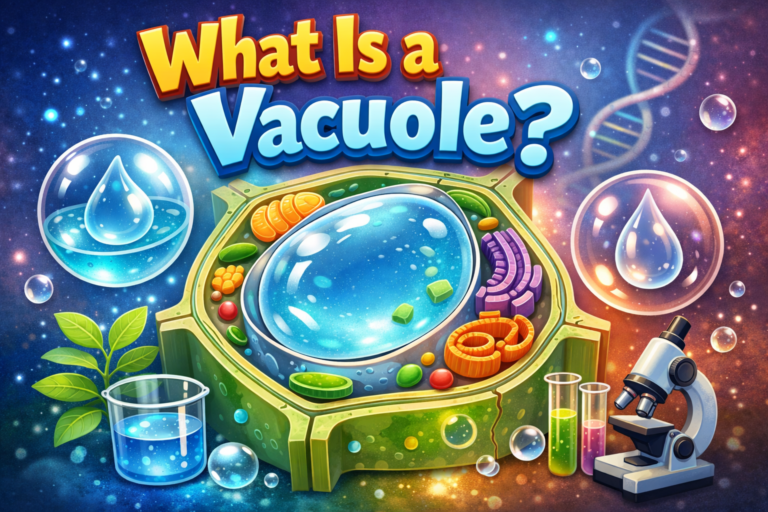
A vacuole is a membrane-bound organelle found inside the cytoplasm of many types of cells. It is surrounded by a thin membrane called the tonoplast, which separates the contents of the vacuole from the rest of the cell. Vacuoles are especially large and prominent in plant cells, where a single central vacuole can occupy up to 80–90% of the cell’s total volume. In animal cells, vacuoles are usually smaller and more numerous. The fluid inside a vacuole is called cell sap, and it contains water, dissolved salts, sugars, proteins, and waste materials. Vacuoles are essential for maintaining the internal balance of the cell. They help regulate water content, store useful substances, and isolate harmful materials. Because of these roles, vacuoles are important for cell survival, growth, and overall function in both simple and complex organisms.
Work (Functions) of Vacuole
- Stores water, nutrients, and minerals
- Maintains turgor pressure in plant cells
- Helps maintain the shape and structure of the cell
- Stores waste materials
- Removes excess water (in contractile vacuoles)
- Stores pigments that give color to flowers and fruits
- Helps in growth by expanding and increasing cell size
Structure and Types of Vacuoles
The structure of a vacuole is simple but highly important. It consists of a fluid-filled sac enclosed by the tonoplast membrane. This membrane controls what enters and leaves the vacuole, helping maintain proper chemical conditions inside the cell. In plant cells, the central vacuole is very large and pushes the cytoplasm toward the edges of the cell, helping the cell maintain its shape and rigidity. In animal cells, vacuoles are smaller and often involved in storage and transport. Some single-celled organisms, such as protozoa, contain special vacuoles called contractile vacuoles that pump excess water out of the cell to prevent bursting. There are also food vacuoles that temporarily store nutrients. Although vacuoles may differ in size and function depending on the organism, they all serve the basic purpose of storage and internal regulation.