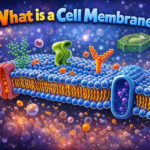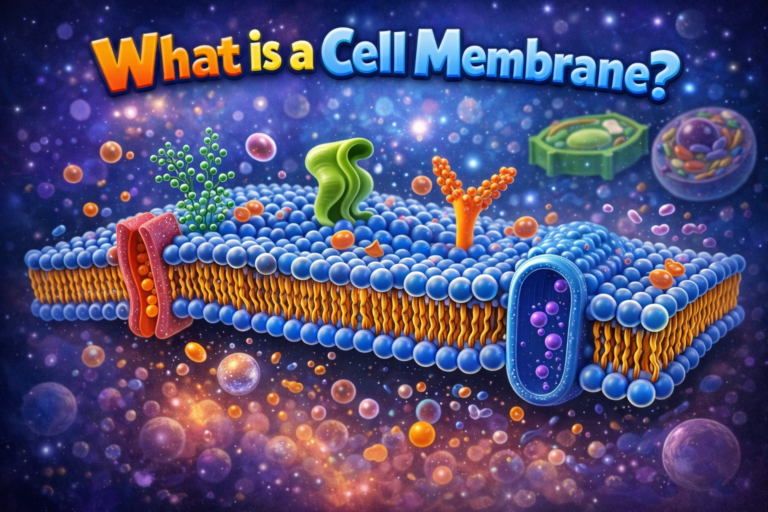
The cell membrane is a thin, flexible outer covering that surrounds a cell and separates it from the external environment. It is mainly made of lipids and proteins arranged in a double layer called the phospholipid bilayer. This structure gives the membrane both strength and flexibility, allowing the cell to maintain its shape while still moving and changing when needed. The cell membrane is sometimes called the plasma membrane and is present in all living cells, including plant and animal cells. It acts as a protective barrier that controls the movement of substances into and out of the cell. Because of this selective nature, the cell membrane helps maintain a stable internal environment essential for proper cell functioning.
Work of Cell Membrane
- Protects the cell from the outside environment
- Controls entry and exit of substances
- Maintains the shape of the cell
- Helps in communication between cells
- Keeps cell contents together
- Allows nutrients to enter the cell
- Removes waste materials from the cell
Structure of the Cell Membrane
The cell membrane is mainly composed of a phospholipid bilayer, where each phospholipid molecule has a water-attracting head and a water-repelling tail. These molecules arrange themselves into two layers, forming a stable boundary around the cell. Proteins are embedded within this lipid layer and help transport materials and carry out communication between cells. Cholesterol molecules provide additional strength and stability to the membrane in animal cells. Some proteins act as channels or carriers that allow specific substances such as nutrients and ions to pass through. Carbohydrate chains attached to proteins and lipids help cells recognize each other. This organized structure allows the membrane to be flexible while still maintaining control over the movement of substances.
Importance of the Cell Membrane
The cell membrane is essential for the survival and proper functioning of a cell. It protects the internal components of the cell from harmful substances and physical damage. By controlling what enters and leaves the cell, it helps maintain the correct balance of water, salts, and nutrients. This balance is necessary for chemical reactions that occur inside the cell. The membrane also allows cells to communicate with each other through special receptor proteins that receive signals from the environment. Without the cell membrane, the contents of the cell would leak out and the cell would not survive. Therefore, the cell membrane plays a vital role in maintaining life at the cellular level.