
The richest countries in the world are generally ranked by GDP per capita, which measures the average economic output per person rather than total national wealth. Nations such as Luxembourg, Singapore, Ireland, Qatar, Norway, and Switzerland consistently rank among the top richest countries due to their strong economies, high-income industries, advanced financial sectors, and excellent living standards. These countries benefit from stable governments, skilled workforces, innovation, and global trade. While larger economies like the United States and China lead in total GDP, smaller nations often achieve much higher income per resident. The richest countries by GDP per capita are frequently searched by students, travelers, investors, and people interested in the global economy and world rankings.
Which Are the Richest Countries in the World?
The richest countries in the world are typically ranked using GDP per capita, a measure that reflects the average economic output generated per person. While some nations have the largest overall economies, countries with smaller populations often achieve higher income levels and better living standards. Strong financial systems, advanced technology, global trade, innovation, and stable governments contribute to their long-term economic success. Nations such as Luxembourg, Singapore, Ireland, Switzerland, and Qatar consistently appear at the top of global wealth rankings. Understanding the richest countries in the world helps students, investors, travelers, and business professionals compare economic performance, income levels, and quality of life across different regions.
- The richest countries are generally ranked by GDP per capita rather than total GDP.
- Luxembourg is widely recognized as the richest country by GDP per capita.
- Singapore is a global leader in finance, trade, and technology.
- Ireland has experienced rapid economic growth through multinational investment.
- Switzerland is known for banking, pharmaceuticals, and a high standard of living.
- Qatar benefits from large natural gas and energy exports.
- Norway combines oil wealth with a strong sovereign wealth fund.
- The United States has the world’s largest economy by total GDP but not the highest GDP per capita.
- High-income countries typically invest heavily in education, healthcare, and innovation.
- Economic rankings can change over time due to growth, inflation, and global market conditions.
Top 10 Richest Countries in the World
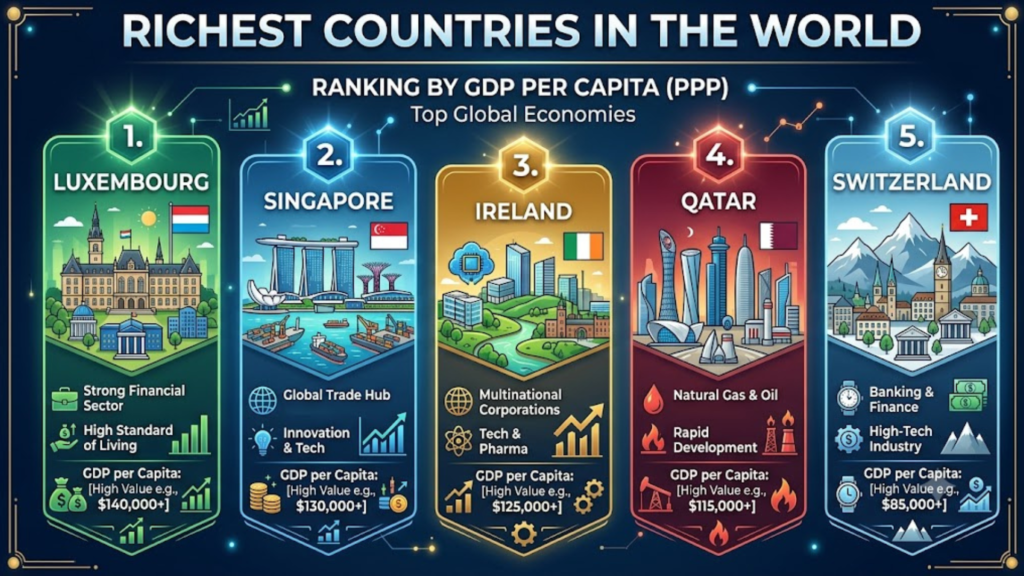
The Top 10 Richest Countries in the World are usually ranked by GDP per capita, which measures the average economic output and income generated per person. This indicator provides a clearer picture of a country’s wealth than total GDP because it considers population size. Countries with strong financial services, advanced technology, natural resources, and stable economic policies consistently occupy the top positions. Nations such as Luxembourg, Singapore, and Ireland have maintained their status through innovation, global investment, and high-value industries. The table below highlights the richest countries in the world, their estimated GDP per capita, and the major industries driving their economic growth.
| Rank | Country | Approx. GDP Per Capita (USD) | Main Industry |
| 1 | Luxembourg | $140,000+ | Banking, Financial Services |
| 2 | Singapore | $90,000+ | Finance, Trade, Technology |
| 3 | Ireland | $100,000+ | Pharmaceuticals, Technology |
| 4 | Qatar | $80,000+ | Oil & Natural Gas |
| 5 | Norway | $95,000+ | Oil, Energy, Shipping |
| 6 | Switzerland | $95,000+ | Banking, Pharmaceuticals |
| 7 | Brunei | $85,000+ | Oil & Gas |
| 8 | United Arab Emirates | $60,000+ | Oil, Tourism, Finance |
| 9 | United States | $85,000+ | Technology, Finance, Manufacturing |
| 10 | Denmark | $75,000+ | Renewable Energy, Pharmaceuticals, Shipping |
Note: GDP per capita figures are approximate and may vary slightly depending on the source and the latest economic data (IMF, World Bank, or other international organizations).
Why Are These Countries So Rich?
The richest countries in the world have achieved economic success because of a combination of strong financial systems, advanced technology, natural resources, innovation, and effective government policies. These nations have created a business-friendly environment that attracts global investments and supports long-term growth. High-quality education, skilled workers, modern infrastructure, and stable economies also play an important role in increasing national wealth and improving living standards.
- Strong Financial Sector: Countries like Luxembourg, Switzerland, and Singapore have powerful banking and financial systems that attract international businesses and investors.
- Advanced Technology and Innovation: Investment in research, technology, artificial intelligence, and digital services helps countries increase productivity and create high-value industries.
- Natural Resources: Nations such as Qatar, Norway, and Brunei benefit from large reserves of oil and natural gas, which contribute significantly to their national income.
- Global Trade and Business Environment: Countries with open markets, strong export industries, and business-friendly policies attract multinational companies and boost economic growth.
- Tourism Industry: Many wealthy nations generate major revenue through tourism by offering world-class infrastructure, luxury services, and cultural attractions.
- Stable Economy and Government Policies: Political stability, effective economic planning, low corruption levels, and strong institutions help maintain continuous development.
- Skilled Workforce and Education: Investment in education and professional training creates a highly productive workforce that supports innovation and economic expansion.
- Infrastructure Development: Modern transportation, communication networks, and smart cities help businesses operate efficiently and encourage foreign investment.
The richest countries in the world have achieved their economic position through a combination of innovation, strong industries, smart policies, and long-term development strategies. Countries like Luxembourg, Singapore, Switzerland, Qatar, and Norway show that a strong economy is built not only on natural resources but also on technology, skilled manpower, financial strength, and global connectivity. Although large economies such as the United States and China lead in total GDP, smaller nations often rank higher in GDP per capita due to their high income levels and efficient economic systems. Understanding the top richest countries in the world provides valuable insights into global economic trends, business opportunities, and changing standards of living across different regions.

