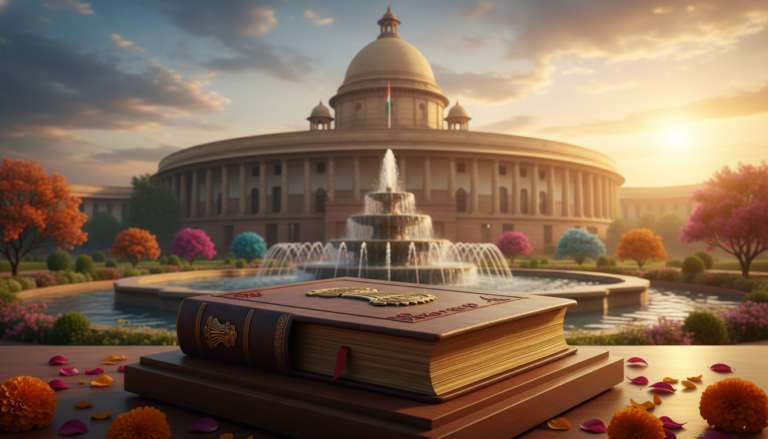
Have you ever wondered how a nation of 1.4 billion people, with thousands of languages and hundreds of ethnicities, remains bound by a single, unbreakable legal thread? The Indian Constitution is not merely a legal document; it is a living, breathing blueprint that defines the soul of the world’s largest democracy. In a rapidly evolving geopolitical landscape, understanding the framework of our nation has never been more critical for citizens, students, and legal experts alike.
The Indian Constitution serves as the supreme law of India, establishing the structure, procedures, powers, and duties of government institutions while setting out fundamental rights, directive principles, and the duties of citizens. Adopted by the Constituent Assembly on November 26, 1949, and coming into effect on January 26, 1950, it replaced the Government of India Act 1935 as the country's fundamental governing document. Official Website: Legislative Department, Ministry of Law and Justice
The Breaking Evolution: Why the Indian Constitution Matters Today
The Indian Constitution is currently undergoing significant interpretive shifts through landmark Supreme Court judgments and legislative amendments. From the nuances of the Right to Privacy to the evolving dynamics of Federalism, the document remains at the center of every national debate. For students preparing for high-stakes exams, staying updated on constitutional changes is mandatory.
Know More:- SSC CGL Final Result 2026 Out: Download Merit List and Cut-Off Marks Now
In recent months, discussions regarding the "Basic Structure Doctrine" have resurfaced in the halls of Parliament and the Supreme Court. This doctrine ensures that while the Parliament can amend the Constitution, it cannot destroy its core identity. This balance of power is what keeps the Indian democratic machinery running smoothly even during turbulent political cycles.
Historical Timeline: The Making of a Masterpiece
The journey of the Indian Constitution is a saga of resilience and intellectual brilliance. It took exactly 2 years, 11 months, and 18 days to complete this monumental task. The Constituent Assembly met for 11 sessions, covering every possible aspect of human rights and governance.
- August 29, 1947: Setting up of the Drafting Committee under the Chairmanship of Dr. B.R. Ambedkar.
- November 26, 1949: The Constitution was adopted and signed by the President of the Assembly.
- January 24, 1950: The 284 members of the Constituent Assembly signed the handwritten document.
- January 26, 1950: The Constitution officially came into force, marking the birth of the Republic of India.
The drafting committee scrutinized the constitutions of over 60 countries. They borrowed the best features—like Parliamentary form from the UK, Bill of Rights from the USA, and Directive Principles from Ireland—to tailor a unique document for India's diverse needs.
The Preamble: The Soul of the Indian Constitution
The Preamble is the introductory statement that sets out the guiding purpose and principles of the Indian Constitution. It declares India to be a Sovereign, Socialist, Secular, and Democratic Republic. It aims to secure Justice, Liberty, Equality, and Fraternity for all its citizens.
Know More:- SSC CGL Toppers List 2026: Inspiring Success Stories and Rank Holders
Interestingly, the words "Socialist" and "Secular" were not in the original Preamble. They were added via the 42nd Amendment Act in 1976. This amendment is often referred to as the "Mini-Constitution" due to the vast changes it brought to the original text.
Key Features of the Indian Constitution
What makes the Indian Constitution stand out globally? It is the longest written constitution of any sovereign country in the world. Originally, it had 395 articles in 22 parts and 8 schedules; today, it has expanded significantly through various amendments.
1. Federal System with Unitary Bias
India follows a federal structure with a strong central government. This "Quasi-federal" nature ensures that the country remains united during emergencies while allowing states autonomy in local governance. This is a common topic in various state-level examinations.
Know More:- UP TGT Syllabus 2026: Comprehensive Subject-Wise Exam Pattern and Guide
2. Parliamentary Form of Government
The Constitution provides for a parliamentary system at both the Center and the States. The President is the nominal executive, while the Prime Minister leads the real executive. This ensures accountability of the executive to the legislature.
3. Fundamental Rights
The Indian Constitution guarantees six fundamental rights to its citizens. These are justifiable, meaning if they are violated, a person can approach the High Court or Supreme Court directly. These rights are the bedrock of individual freedom in India.
Fundamental Rights and Duties: A Detailed Overview
Part III of the Indian Constitution is often called the Magna Carta of India. It contains the Fundamental Rights which are essential for the moral and spiritual development of citizens.
- Right to Equality (Articles 14-18): Ensures equal protection before the law and prohibits discrimination.
- Right to Freedom (Articles 19-22): Includes freedom of speech, assembly, and profession.
- Right Against Exploitation (Articles 23-24): Prohibits human trafficking and child labor.
- Right to Freedom of Religion (Articles 25-28): Guarantees the right to practice and propagate any religion.
- Cultural and Educational Rights (Articles 29-30): Protects the interests of minorities.
- Right to Constitutional Remedies (Article 32): Termed the "Heart and Soul" of the Constitution by Dr. Ambedkar.
Know More:- UP TGT Vacancy 2026: Official Notification, Eligibility, and Application Process
While rights are essential, the 42nd Amendment added "Fundamental Duties" under Article 51A. These duties remind citizens that while they enjoy rights, they also have responsibilities toward the nation, such as respecting the National Flag and protecting the environment.
The Role of the President and Executive
The President of India is the First Citizen and the Supreme Commander of the Armed Forces. Although the powers are largely ceremonial, the President plays a crucial role during constitutional crises. Many great leaders have graced this office, bringing dignity and wisdom to the nation.
Know More:- Dr. A.P.J. Abdul Kalam: The Missile Man Who Inspired a Nation
The executive branch, led by the Prime Minister, is responsible for the day-to-day administration. This structure ensures that policies are implemented efficiently across the vast geography of India, from the northern Himalayas to the southern coasts.
Directive Principles of State Policy (DPSP)
Part IV of the Indian Constitution contains the Directive Principles. Unlike Fundamental Rights, these are non-justiciable in court but are fundamental in the governance of the country. They serve as a guide for the state to create a social order aimed at the welfare of the people.
These principles cover various aspects, such as the promotion of cottage industries, the protection of monuments, and the separation of the judiciary from the executive. They represent the "Economic Democracy" that the founding fathers envisioned for India.
The Amendment Process: Keeping it Contemporary
Article 368 gives Parliament the power to amend the Indian Constitution. This flexibility is why the document is called a "Living Document." It has been amended over 100 times to adapt to changing social and economic realities.
Know More:- SSC CGL Toppers List 2026: Check Names and Ranks of Top 10 Candidates
Recent amendments include the introduction of the Goods and Services Tax (GST), the EWS (Economically Weaker Sections) reservation, and the Constitutional status for the National Commission for Backward Classes. These changes reflect the dynamic nature of Indian law.
Constitutional Impact on Education and Employment
The Indian Constitution places a heavy emphasis on education. Article 21A makes the right to education a fundamental right for children aged 6 to 14. This constitutional mandate drives the various state boards and national education policies.
Know More:- MP Board Exam 2026: Complete Guide to MPBSE Schedule and Preparation
Similarly, the Constitution ensures reservation in public employment (Articles 15 and 16) to uplift historically marginalized communities. This has a direct impact on how recruitment processes are conducted for various government vacancies.
Know More:- UP PGT Vacancy 2026: Official Notification, Eligibility, and Application Process
Why Aspirants Must Master the Constitution
Whether you are appearing for the Civil Services, SSC, or state-level teaching exams, the Indian Constitution is a significant part of the syllabus. Understanding the articles, schedules, and latest amendments is often the difference between selection and rejection.
Know More:- TSBIE 2026: Essential Updates for Telangana Intermediate Exams
For instance, questions about the distribution of powers between the Center and States often appear in competitive exams. This distribution is categorized into three lists: the Union List, State List, and Concurrent List, found in the Seventh Schedule.
Know More:- SEBA HSLC Result 2026 Date Assam: Official Release Date Announced
Significant Schedules You Should Know
The schedules are essentially tables that contain additional details not mentioned in the articles. Initially, there were 8, but now there are 12 schedules in the Indian Constitution.
- First Schedule: Names of States and Union Territories.
- Fourth Schedule: Allocation of seats in the Rajya Sabha.
- Seventh Schedule: Division of powers (Union, State, and Concurrent Lists).
- Tenth Schedule: Anti-defection law.
- Eleventh & Twelfth Schedules: Powers and responsibilities of Panchayats and Municipalities.
Challenges and Future Outlook
While the Indian Constitution is robust, it faces modern challenges. Issues like digital privacy, artificial intelligence ethics, and climate change were not envisioned in 1950. However, the interpretive power of the Judiciary ensures that the Constitution evolves to meet these challenges.
The "Doctrine of Harmonious Construction" is often used by courts to resolve conflicts between different parts of the Constitution. This ensures that no single article overrides the fundamental essence of the document. As we move further into the 21st century, the Constitution remains the ultimate safeguard against the erosion of democratic values.
Conclusion: A Document of the People, by the People
The Indian Constitution is the bedrock of our identity as a nation. It has survived numerous crises, including the Emergency of the 1970s, and emerged stronger each time. For every Indian, it is a shield against injustice and a roadmap toward a prosperous future.
As citizens, it is our duty to not just read the Constitution but to live by its values. For students and aspirants, it is the most rewarding subject that offers insights into how our nation functions. As we look toward the future, the Constitution will continue to be the guiding light for the "New India."
Do you believe the Indian Constitution needs more flexibility to adapt to the digital age, or should its basic structure remain strictly untouched to protect our democratic roots?