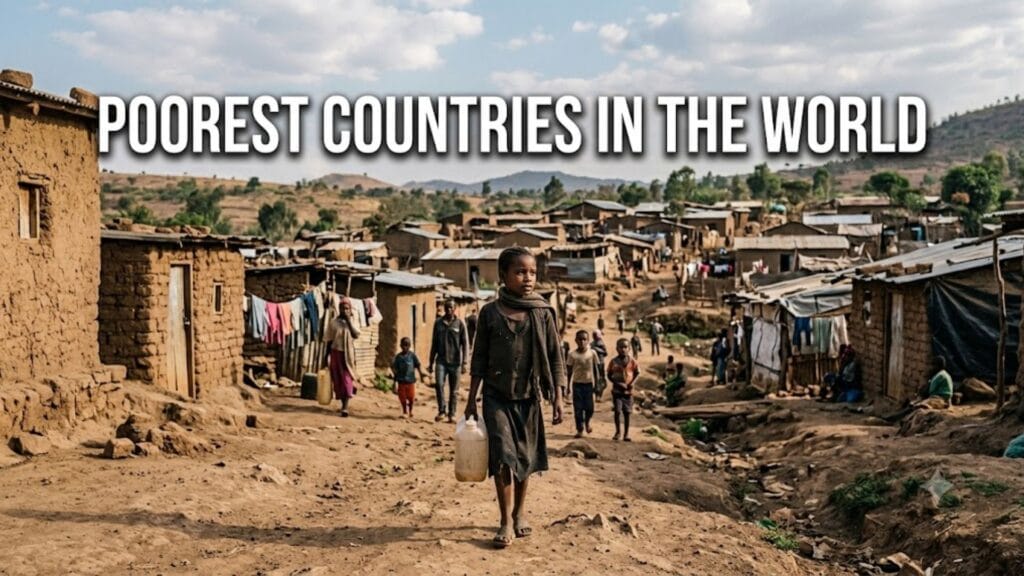

The poorest countries in the world are mainly ranked by GDP per capita, income levels, and economic development. Many of these nations face challenges such as poverty, unemployment, limited healthcare, and low industrial growth. Countries like Burundi, South Sudan, Central African Republic, Malawi, Mozambique, and Niger are among the lowest GDP per capita countries in the world. The main reasons behind extreme poverty include political instability, conflicts, climate issues, and limited resources. Understanding the poorest countries in the world 2026 helps analyze global economic inequality and development challenges. International organizations continue working to improve education, infrastructure, and living standards in these developing nations.
Click to Check: Richest Countries in the World
List of Top Poorest Countries in the World
The poorest countries in the world are generally identified based on GDP per capita, economic growth, income levels, and living conditions. These nations often face challenges such as poverty, unemployment, weak infrastructure, political instability, and limited access to healthcare and education. The top poorest countries in the world 2026 include several African and developing nations where average income remains very low compared to global standards. Understanding the poorest countries in the world by GDP per capita helps highlight global economic inequality and the challenges faced by millions of people. Below is the list of countries with the lowest GDP per capita in the world.
| Rank | Country | Continent | GDP Per Capita (Approx.) | Major Challenges |
| 1 | Burundi | Africa | $300–400 | Poverty, low economic growth |
| 2 | South Sudan | Africa | $400–500 | Conflict, instability, unemployment |
| 3 | Central African Republic | Africa | $500–600 | Weak infrastructure, poverty |
| 4 | Malawi | Africa | $600–700 | Food insecurity, low income |
| 5 | Mozambique | Africa | $700–800 | Limited development, poverty |
| 6 | Niger | Africa | $700–900 | Climate issues, low resources |
| 7 | Democratic Republic of Congo | Africa | $800–900 | Political challenges, inequality |
| 8 | Madagascar | Africa | $900–1,000 | Economic slowdown, poverty |
| 9 | Liberia | Africa | $900–1,100 | Healthcare and employment issues |
| 10 | Sierra Leone | Africa | $1,000–1,200 | Low industrial development |
Key Points: Why Are These Countries Poor?
The poorest countries in the world share several economic, political, and environmental challenges that slow their development. Low industrial output, weak governance, and limited investment reduce employment opportunities and national income. Many of these countries also struggle with armed conflicts, climate-related disasters, poor healthcare systems, and inadequate education facilities. Heavy dependence on agriculture and foreign aid further affects long-term economic stability. Rapid population growth combined with limited resources places additional pressure on governments. Understanding why countries remain poor helps explain the factors behind low GDP per capita, slow economic growth, and persistent poverty across many developing nations.
- Political instability discourages domestic and foreign investment.
- Armed conflicts and civil wars damage infrastructure and weaken economies.
- Low GDP per capita limits purchasing power and economic activity.
- High unemployment reduces household income and increases poverty.
- Poor education systems create a shortage of skilled workers.
- Limited healthcare access affects productivity and life expectancy.
- Heavy dependence on agriculture makes economies vulnerable to droughts and climate change.
- Weak infrastructure, including roads, electricity, and internet, slows business growth.
- Corruption and weak governance reduce the effectiveness of public spending.
- Rapid population growth increases pressure on jobs, food, housing, and public services.
- Natural disasters and climate change frequently disrupt economic progress.
- High external debt limits government spending on development projects.
- Low industrialization results in fewer manufacturing and export opportunities.
- Dependence on foreign aid can slow the development of self-sustaining economies.
- Limited access to global markets restricts trade and long-term economic growth.
The poorest countries in the world continue to face multiple barriers that prevent faster economic progress. While low GDP per capita remains an important indicator, it does not tell the complete story. Political stability, quality education, healthcare access, employment opportunities, and strong infrastructure all play a vital role in improving living standards. Many of these nations are gradually working toward sustainable development with support from international organizations and long-term policy reforms. Understanding the reasons behind poverty helps readers gain a clearer picture of global economic inequality and the importance of inclusive growth. Continued investment in human development, governance, and infrastructure can create better opportunities for future generations and reduce poverty over time.
Poorest Countries in the World: FAQs
1. Which is the poorest country in the world?
Burundi is widely regarded as one of the poorest countries in the world based on GDP per capita. The country faces persistent economic challenges, including low industrial development, limited employment opportunities, inadequate infrastructure, and dependence on agriculture, all of which contribute to slow economic growth.
2. How are the poorest countries in the world ranked?
Most global organizations rank the poorest countries using GDP per capita, along with factors such as national income, purchasing power, economic productivity, and overall living standards. These indicators help compare the financial well-being of different countries more accurately than population size alone.
3. Why are most of the world’s poorest countries located in Africa?
Many African nations experience long-term challenges such as political instability, armed conflicts, weak infrastructure, climate-related disasters, limited industrialization, and restricted access to quality education and healthcare. These factors collectively slow economic development and make poverty reduction more difficult.
4. Can poor countries improve their economic condition?
Yes. Countries can strengthen their economies by investing in education, healthcare, infrastructure, agriculture, technology, and job creation. Stable governance, transparent institutions, foreign investment, and effective economic policies also play a significant role in achieving long-term economic growth.
5. Does a low GDP per capita mean everyone in a country is poor?
No. GDP per capita represents the average economic output or income per person and does not reflect individual wealth distribution. Even in countries with low GDP per capita, some people and businesses may be financially successful, while income inequality can remain significant.


