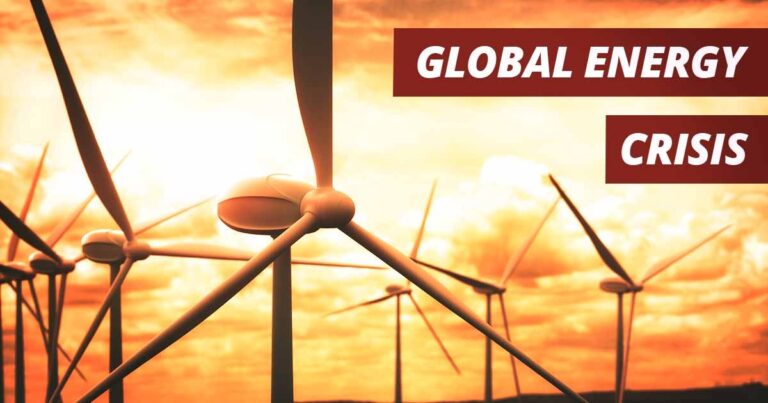
Hey there! Think of me as your mentor helping you navigate the world of Static General Knowledge (GK). Today, we’re breaking down the Energy Crisis.
Don’t let the big words scare you—at its heart, an energy crisis is just a "demand vs. supply" problem. It’s like when everyone in a city wants to charge their phone at the same time, but there isn't enough electricity to go around.
Let’s dive into the notes!
💡 Understanding the Energy Crisis
In simple terms, an energy crisis happens when a country (or the whole world) can't get enough fuel or electricity to keep things running, leading to sky-high prices.
The Three "Sides" of the Crisis:
- The Wallet (Economic): When oil or electricity prices go up, everything else (like food and travel) gets more expensive.
- The Power Play (Geopolitical): Sometimes, countries that own oil (like those in OPEC) use it as a "political tool" to influence other nations.
- The Planet (Environmental): We are running out of "dirty" fuels (coal, oil) and need to switch to "green" energy (solar, wind) fast.
Mentor’s Tip: The International Energy Agency (IEA) says a crisis isn't just about "running out" of fuel; it’s about whether people can actually afford it.
⏳ History’s Biggest "Energy Shocks"
For exams like UPSC or SSC, you need to know these three major turning points:
- 1973 – The First Oil Shock: Arab countries stopped sending oil to nations that supported Israel during the Yom Kippur War. Result? Oil prices jumped 400%!
- 1979 – The Second Oil Shock: The Iranian Revolution caused oil production to drop, leading to long lines at petrol pumps worldwide.
- 2021-2022 – The Modern Crisis: After the pandemic, everyone wanted energy at once. Then, the Russia-Ukraine conflict made things worse because Europe relied heavily on Russian gas.
Must Read: UPSC CMS Exam Schedule 2026: Official Notification Out for 1358 Vacancies
📊 Classifying Energy (The Basics)
| Category | What is it? | Examples | The Problem |
|---|---|---|---|
| Non-Renewable | Stuff that runs out | Coal, Oil, Gas | It’s finishing fast (Peak Oil). |
| Renewable | Nature’s power | Solar, Wind | Doesn't work when it's cloudy/still. |
| Nuclear | Atomic power | Uranium | Dangerous if there’s an accident. |
| Secondary | Derived energy | Electricity | The "Grid" can fail. |
🇮🇳 The India Perspective
India’s energy story is unique. Here is what you should know for your notes:
- Coal is still King: Over 50% of India’s power still comes from coal. If the mines stop, the lights go out.
- Peak Oil Theory: Proposed by M. King Hubbert, this is the idea that one day we will hit the "maximum" oil production, and then it will only go down from there.
- Security vs. Equity:
- Security = Having enough energy for the country.
- Equity = Making sure even the smallest village can afford a lightbulb.
Related Update: AP Assistant Professor Recruitment 2026: 1,500+ Posts Out
📌 Rapid-Fire Facts (Memorize These!)
Global Facts
- IEA (International Energy Agency): Based in Paris (1974).
- OPEC: Based in Vienna, Austria (1960). They control the world's oil tap.
- Top Oil Producer: The USA is currently #1, followed by Saudi Arabia.
- Coal Giant: China is #1; India is #2.
India-Specific Facts
- First Oil Well: Digboi, Assam (1889).
- First Nuclear Plant: Tarapur, Maharashtra (1969).
- Largest Solar Park: Bhadla Solar Park, Rajasthan.
- International Solar Alliance (ISA): Headquartered in Gurugram, India. (A huge win for Indian diplomacy!)
| Nuclear Plant | Where is it? | Partner Country |
|---|---|---|
| Kudankulam | Tamil Nadu | Russia |
| Jaitapur | Maharashtra | France |
| Narora | Uttar Pradesh | India (Indigenous) |
📝 Master Revision Points (The "Cheat Sheet")
- Energy Crisis = Demand is higher than supply.
- 1973 was the year the world realized oil is a political weapon.
- OPEC was born in Baghdad (1960) but lives in Vienna now.
- Coal is the backbone of Indian electricity.
- Tarapur was our first step into Nuclear energy.
- ISA is the only major international body based in India (Gurugram).
- BEE (Bureau of Energy Efficiency) is why your fridge has "Star Ratings."
- Strategic Reserves: India hides oil in huge underground caves (Visakhapatnam, Padur) for emergencies.
- SDG 7: The UN goal for "Clean and Affordable Energy."
- Net Zero: India aims to stop adding to global warming by 2070.
✍️ Practice Corner
Quick Quiz (MCQs)
- Where is the IEA headquartered? (Ans: Paris)
- Which state has the Bhadla Solar Park? (Ans: Rajasthan)
- What is the fuel for India's 3-stage nuclear plan found in Kerala? (Ans: Thorium)
Subjective Question for Mains
"Why is shifting to Solar energy a 'geopolitical' move for India and not just an environmental one?"
(Hint: Think about how it reduces our dependence on buying oil from other countries!)
Expert Tip: When you study a power plant, look it up on a map! Seeing where Kudankulam is (the tip of Tamil Nadu) helps you remember it much better than just reading the name.
Must Read: SSC CGL Final Result 2025 Out: Check Merit List PDF
Research Task: If India starts using Green Hydrogen, will we still need to care about oil prices in the Middle East? Think about it!