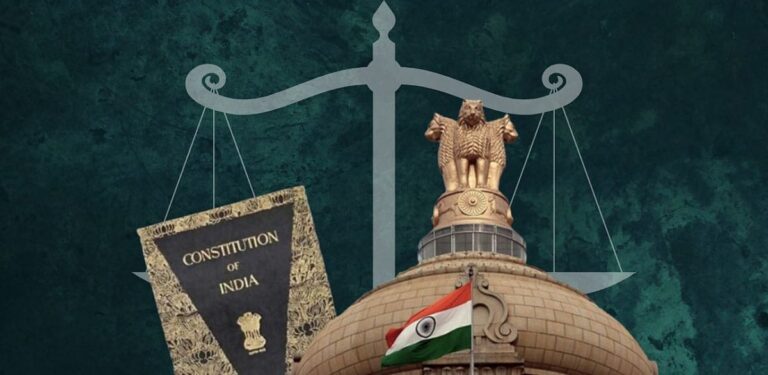
Historical Background & Making of Indian Constitution 2026: Complete Study Guide for UPSC & State PSC Aspirants
Cracking the UPSC and State Civil Services in 2026 requires more than just reading; it demands a deep grasp of the Historical Background and the Making of the Indian Constitution. This foundational topic is the bedrock of your Polity preparation, consistently accounting for 15–20% of the marks in both Prelims and GS Paper II.
We have verified the latest 2026 syllabus guidelines and exam trends to ensure this guide aligns with the most recent requirements from the Union Public Service Commission. Whether you are a first-timer or a veteran, this roadmap will help you transition from rote memorization to analytical mastery.
Latest Updates on Historical Background & Making of Indian Constitution 2026
The 2026 Civil Services examination cycle is placing a renewed emphasis on "applied history." While the syllabus remains rooted in the colonial-era legislative timeline, examiners are shifting their focus toward how these historical acts influence modern constitutional interpretation.
You aren't just learning dates; you are tracing the evolution of Indian democracy. Current trends suggest that questions are moving away from simple factual recall toward the intent behind the transition from Company Rule to Crown Rule. Understanding this shift is non-negotiable for anyone aiming to clear the 2026 Mains.
Expert Insight: Don't just memorize the years. Focus on the "Why." Why did the British shift from a trading entity to a sovereign power? This analytical depth is what separates top-tier candidates from the rest.
Eligibility Criteria & Preparation Scope for 2026 Exams
Mastering the Indian Constitution is a universal requirement for all civil service aspirants. Whether you are targeting the UPSC IAS, State PSCs, or SSC CGL, the core concepts remain the same.
- Age Requirements: For UPSC 2026, you must be between 21 and 32 years of age (general category). Remember to check your specific state notification for age relaxation updates.
- Educational Foundation: A Bachelor’s degree from any recognized university is the baseline.
- Preparation Scope: This topic covers the evolution of the Indian state, starting from the Regulating Act of 1773 through to the Independence Act of 1947.
Exam Pattern & Syllabus: The 2026 Roadmap
To succeed, you need to break down the massive syllabus into manageable, high-yield segments. We’ve organized the core components below to help you structure your 2026 study plan.
| Topic Segment | Core Focus Area | 2026 Exam Significance |
|---|---|---|
| The Company Rule Era | Regulating Act 1773 to Charter Act 1853 | Understanding the roots of centralization. |
| The Crown Rule Era | Govt of India Act 1858 to Indian Independence Act 1947 | Administrative evolution & federal structure. |
| The Constituent Assembly | Composition, Key Committees, Dr. B.R. Ambedkar | Analyzing the legislative assembly process. |
| Sources & Philosophy | Borrowed features, Preamble, Basic Structure | Connecting historical intent to modern laws. |
Related Update: UGC NET June 2026 Application Form Soon: NTA Notification, Exam Dates and Eligibility Criteria Updates
The Evolution of Governance: A Deep Dive
1. The Era of Company Rule (1773–1858)
It all started with the Regulating Act of 1773. For the first time, the British Parliament stepped in to regulate the East India Company’s affairs in India. They designated the Governor of Bengal as the Governor-General and established a Supreme Court at Fort William.
But here’s the catch: the Company’s grip was slipping. Through various Charter Acts, the British slowly stripped away the Company’s commercial monopoly, turning them into a mere administrative arm of the Crown. By the time the 1853 Act rolled around, the stage was set for a total takeover.
2. The Era of Crown Rule (1858–1947)
The revolt of 1857 changed everything. The British Crown took direct control, and the "Government of India" became a formal entity.
If you look closely at the Government of India Act 1919 and the Government of India Act 1935, you’ll see the blueprint of our modern Constitution. The 1935 Act, in particular, provided the structure for our current federal system, provincial autonomy, and the division of powers. It’s not just history; it’s the DNA of our current legal framework.
3. The Making of the Constituent Assembly
The assembly wasn't just a group of people in a room; it was the culmination of a long struggle for self-determination. Formed in November 1946 under the Cabinet Mission Plan, the Assembly was a complex web of committees and debates.
Dr. B.R. Ambedkar’s role as the Chairman of the Drafting Committee was pivotal. He navigated the competing interests of various stakeholders to create a document that was both inclusive and robust. After years of intense deliberation, the Constitution was enacted on 26 November 1949 and officially came into force on 26 January 1950.
Must Read: BPCL Recruitment 2026 Notification Out: Apply Online for 250 Executive Posts, Check Eligibility
Expert Preparation Strategies for 2026
You have the syllabus, but how do you actually study it? Here is the strategy that top rankers use.
Start with the Right Resources
Don't overwhelm yourself with ten different books. Stick to the basics:
- NCERT Class 11 ('Indian Constitution at Work'): This is your Bible. It builds the conceptual foundation.
- M. Laxmikanth: Use this for deep dives into the historical Acts and the Constituent Assembly.
Analyze Previous Year Papers (PYQs)
The 2026 exam will test your ability to apply constitutional principles. Look at the last 10 years of papers. Notice how the questions ask about the impact of the 1935 Act on the current Constitution? That’s the pattern you need to follow.
The Power of Mind Maps
History can be dry if you just read it. Create timelines. Draw a chart starting from 1773 and ending in 1947. Mark the key features of each Act on the right and the consequences on the left. Visualizing the progression makes it much easier to remember during the pressure of an exam.
Connect to the Present
When you read about the "Basic Structure" or "Federalism," look for current news. If a state is arguing with the center over jurisdiction, link it back to the history of the 1935 Act. This level of connectivity will earn you extra marks in your Mains answer writing.
Related Update: CRPF Constable Recruitment 2026: Registration Begins Today for 9,195 Posts; Apply Now
Frequently Asked Questions (FAQs)
Q: When did the Constitution officially come into force?
A: It came into force on 26 January 1950, which we celebrate as Republic Day.
Q: Which Act is considered the most significant precursor to the Indian Constitution?
A: The Government of India Act 1935 is widely regarded as the most significant. Much of our current Constitution—including the federal structure and the office of the Governor—is derived directly from its provisions.
Q: How many questions appear from this topic in UPSC?
A: You can expect 2–4 questions related to the historical background in the Prelims annually. In the Mains, this topic often forms the basis for long-form analytical questions.
Q: Is rote memorization enough for this topic?
A: Absolutely not. The 2026 exams are testing for conceptual clarity. Focus on the "why" and the "how" rather than just the "when."
Related Update: AIIMS NORCET 10 Results 2026 Out: Download Scorecard, Check Cut-Off Marks and Merit List
Official Resources for 2026 Aspirants
Stay ahead of the curve by relying on official information. Avoid rumors and third-party speculations. Always cross-reference your exam dates, syllabus changes, and notification details with the official UPSC website.
Final Thoughts for Your 2026 Journey
The road to the Civil Services is long, but it’s built on these small, consistent steps. When you sit down to write your answers, don't just quote the law. Explain the intent behind it. How did our colonial history shape the democratic accountability we value today? If you can answer that, you’re already ahead of 90% of the competition.
Stay focused, stay consistent, and keep your eyes on the goal. Your preparation for the "Historical Background & Making of Indian Constitution" is the first step toward the life of service you’ve envisioned.