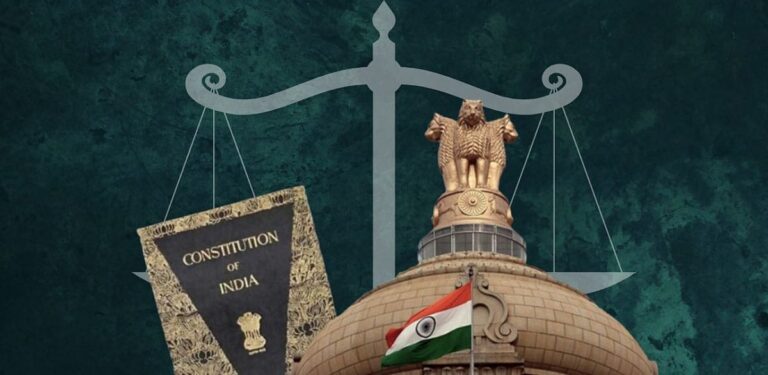
Citizenship – Part II (Articles 5-11): Complete UPSC 2026 Study Guide and Constitutional Analysis
Mastering the constitutional provisions of Citizenship is non-negotiable for the UPSC 2026 examination. Part II of the Indian Constitution, spanning Articles 5 to 11, serves as the bedrock for understanding legal identity in India, distinguishing between constitutional status and statutory laws like the Citizenship Act, 1955.
Why Citizenship (Articles 5-11) is a High-Yield Topic for UPSC 2026
If you are aiming for the 2026 cycle, you cannot afford to skim over Part II. While the Constitution was drafted decades ago, the implementation of the Citizenship Amendment Act (CAA), 2019 rules in 2024 has thrust this topic back into the center of the current affairs syllabus.
Think of Articles 5-11 as the "Constitutional skeleton." It provides the framework, but the Citizenship Act of 1955 provides the "flesh and blood." Examiners love to test your ability to distinguish between these two layers. It is a recurring theme in GS Paper-II, specifically under Polity and Governance.
Must Read: Indian Constitution Preamble Simplified: Essential UPSC Study Notes and Key Concepts for 2026
The Constitutional Blueprint: Decoding Articles 5-11
To clear the Prelims, you need more than a superficial understanding of these articles. You need to know exactly what they cover and, more importantly, what they don't.
Article 5: The Commencement Clause
This article defines who became a citizen at the exact moment the Constitution came into force—January 26, 1950. It was based on three pillars: domicile in India, birth in India, or residency in India for at least five years preceding the commencement.
Article 6: The Migration Clause (Pakistan to India)
Partition created a humanitarian crisis. Article 6 was a temporary provision designed to grant citizenship to those who migrated from Pakistan to India. It set specific dates (July 19, 1948) as a cut-off for registration, creating a legal mechanism for the massive influx of people at the time.
Article 7: The Returnee Clause
What about those who moved to Pakistan after March 1, 1947, but decided to return? Article 7 provided a "second chance" for these individuals to reclaim citizenship, provided they returned under a permit for resettlement.
Article 8: Persons of Indian Origin (PIOs)
This is the precursor to the modern OCI concept. It allowed people of Indian origin living abroad to be registered as Indian citizens by diplomatic or consular representatives, provided they or their parents were born in undivided India.
Article 9: The Single Citizenship Mandate
This is a favorite for UPSC examiners. It explicitly prohibits dual citizenship. If you voluntarily acquire the citizenship of another country, your Indian citizenship terminates immediately. No questions asked.
Article 10: The Guarantee of Rights
This article ensures that every person who is deemed a citizen under the provisions of the Constitution continues to be one, subject to any law made by Parliament. It’s a safeguard against arbitrary state action.
Article 11: The "Master" Power
This is the most powerful article in the series. It grants Parliament the absolute authority to regulate citizenship by law. This is the exact constitutional hook that allowed the government to enact and subsequently amend the Citizenship Act, 1955.
Citizenship Act, 1955: The Practical Mechanism
The Constitution didn't provide a permanent law for citizenship; it left that to the Parliament. The 1955 Act is how you actually become a citizen today.
1. Citizenship by Birth
Born in India on or after January 26, 1950? You are a citizen. However, keep in mind that amendments have tightened this rule to prevent children of illegal migrants from automatically claiming citizenship.
2. Citizenship by Descent
Born outside India? You can still be a citizen if your father (and later, mother) was an Indian citizen at the time of your birth.
3. Citizenship by Registration
This is for those who have ties to India—like PIOs or those married to Indian citizens—who have lived here for a specific duration.
4. Citizenship by Naturalization
This is the path for foreigners. It involves a rigorous process of residency, knowledge of Indian languages, and an oath of allegiance.
5. Citizenship by Incorporation of Territory
If India annexes a new territory, the government notifies who among the residents of that territory shall be considered Indian citizens.
UPSC 2026: Interplay Between Constitution and Statutory Law
The UPSC expects you to understand the hierarchy of these laws.
| Component | Nature | UPSC Focus Area |
|---|---|---|
| Articles 5-11 | Constitutional | Defines the initial state of affairs in 1950. |
| Citizenship Act, 1955 | Statutory | The "living" law that governs acquisition and loss. |
| CAA, 2019 | Amendment | Focus on religious persecution and cutoff dates. |
| OCI Cardholders | Quasi-legal | Understand the rights they lack (voting, office). |
Wait, there’s a catch. Many students conflate "OCI" with "Dual Citizenship." You must clarify this in your notes. An OCI cardholder is a foreign citizen with a lifelong visa to India. They are not Indian citizens. They cannot vote, hold public office, or own agricultural land.
Related Update: Union and Its Territory: Part I (Article 1-4) Explained – UPSC 2026 Exam Notes & Latest Updates
Expert Preparation Tips for the 2026 Aspirant
To ace this, you need to think like a policymaker, not just a student.
- Static vs. Dynamic: Don't get lost in the historical context of 1950. While Articles 5-8 are important for Prelims, the application of the 1955 Act is what drives the Mains questions.
- The CAA Debate: You don't need to be political, but you do need to be analytical. Understand the arguments regarding the exclusion of certain countries or religions. Look at it through the lens of Article 14 (Equality before Law).
- Fundamental Rights Linkage: Create a table of rights available only to citizens. Articles 15, 16, 19, 29, and 30 are the "Big Five." If a question asks about the rights of a foreigner, check if these articles are involved.
- Keep it Current: Follow the Ministry of Home Affairs (MHA) notifications. Any change in the rules regarding naturalization or OCI cards is potential "fodder" for a 10-marker in GS Paper-II.
Related Update: Historical Background & Making of Indian Constitution 2026: Comprehensive Study Guide, Expert Notes & Exam Strategy
Frequently Asked Questions (FAQs)
Q1: Can an Indian citizen have dual citizenship?
- Ans: Absolutely not. Article 9 is clear: if you acquire citizenship of another country, your Indian citizenship is automatically terminated. India maintains a strict "single citizenship" policy.
Q2: What is the primary difference between NRC and NPR?
- Ans: The NPR (National Population Register) is a database of "usual residents"—anyone who has stayed in an area for six months or more. The NRC (National Register of Citizens) is a list of verified Indian citizens. The NPR is a administrative exercise, while the NRC is a verification exercise.
Q3: Does the CAA 2019 apply to all illegal migrants?
- Ans: No. It is a targeted amendment. It provides a path to citizenship specifically for Hindus, Sikhs, Buddhists, Jains, Parsis, and Christians from Afghanistan, Bangladesh, and Pakistan who entered India before December 31, 2014.
Q4: Which ministry is the final authority on citizenship?
- Ans: The Ministry of Home Affairs (MHA). All citizenship applications, naturalization requests, and policy interpretations flow through the MHA.
The Path Forward: Balancing Sovereignty and Human Rights
As we move toward 2026, the discourse around citizenship will only intensify. The core challenge for the Indian state is to balance its sovereign right to control its borders with the constitutional promise of equality.
When you answer questions on this topic, ensure your arguments are balanced. Acknowledge the state’s need for security and accurate population data, but weigh it against the constitutional values of secularism and non-discrimination.
Pro Tip: In your Mains answers, always quote Article 11 to justify why the Parliament has the power to enact laws like the CAA. It shows the examiner you understand the constitutional source of power.
How do you think the future of citizenship laws will evolve in an increasingly globalized world? Let us know your thoughts in the comments below!