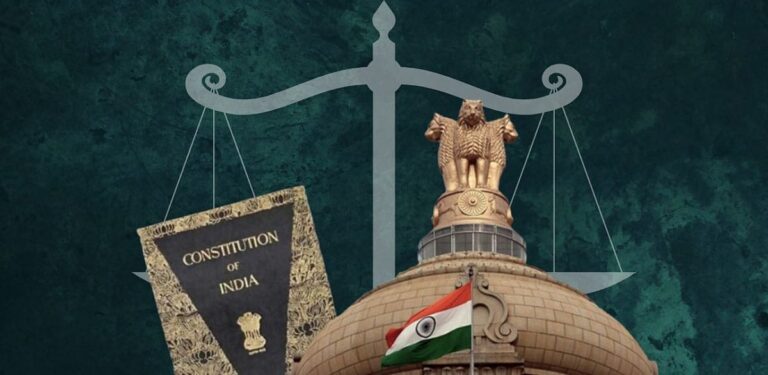
Union and Its Territory (Article 1-4): Complete UPSC 2026 Study Guide and Official Constitutional Framework
Mastering Part I of the Indian Constitution is the single most important step for any serious 2026 UPSC aspirant. These four articles define India’s sovereign identity and the power of the Parliament to redraw the national map. This guide provides the essential legal breakdown, expert analysis, and exam-ready notes for your upcoming civil services preparation.
Must Read: Indian Constitution Preamble Simplified: Essential UPSC Study Notes and Key Concepts for 2026
Understanding Part I: The Constitutional Foundation
The Indian Constitution isn’t just a static document; it’s a living framework that governs our federal structure. Articles 1 through 4 serve as the bedrock of this structure. They establish India as an "Indestructible Union of Destructible States."
If you are aiming for the 2026 Civil Services Examination, you need to look beyond the basic definitions. You must understand the intent of the framers. Dr. B.R. Ambedkar famously noted that the Indian federation was not a result of an agreement between states. Because of this, no state has the right to secede. This concept is the "North Star" for your Polity preparation.
Latest Updates on Union and Its Territory (Article 1-4) 2026
While the text of the Constitution remains stable, the interpretation of federalism evolves with every administrative decision. As of April 2026, the Ministry of Home Affairs continues to monitor internal boundary adjustments to ensure administrative efficiency.
Aspirants often search for "recruitment notifications" regarding these articles, but it is vital to remember: these are constitutional provisions, not jobs. However, they are high-yield topics for the GS Paper II syllabus. For the most accurate, updated text, always cross-reference your notes with the official Constitution of India portal.
Related Update: Historical Background & Making of Indian Constitution 2026: Comprehensive Study Guide, Expert Notes & Exam Strategy
Decoding Articles 1-4: The Exam-Ready Breakdown
To clear the UPSC Prelims, you cannot just memorize the articles. You must understand the implications.
Article 1: Name and Territory of the Union
Article 1 declares India, that is, Bharat, as a "Union of States." Why not a Federation? Because the states did not come together to form the Union. The Union created the states for administrative convenience.
- Territory of India vs. Union of India: This is a classic UPSC trap. "Union of India" includes only the States. "Territory of India" is a broader term encompassing States, Union Territories, and any territory that the government might acquire in the future.
Article 2: Admission or Establishment of New States
This article grants Parliament the power to admit into the Union of India, or establish, new states on such terms and conditions as it thinks fit. It is the legal gateway for incorporating external territories into India.
Article 3: Formation of New States and Alteration of Areas
This is the most powerful tool in the Parliament’s arsenal. It allows the center to:
- Form a new state by separation of territory from any state.
- Increase or diminish the area of any state.
- Alter the boundaries or the name of any state.
The Catch: The President’s recommendation is required, and the bill must be referred to the state legislature for their views. But—and this is critical—the Parliament is not bound by the state’s opinion.
Article 4: Supplemental and Incidental Provisions
This article provides a "safety valve." It states that laws made under Article 2 and Article 3 are not to be considered as amendments to the Constitution under Article 368. This means these changes can be passed by a simple majority in Parliament.
| Article | Core Function | Legislative Requirement |
|---|---|---|
| Article 1 | Names the nation and defines territory | Constitutional Definition |
| Article 2 | Admits new states (external) | Simple Majority |
| Article 3 | Redraws internal boundaries | Simple Majority |
| Article 4 | Exempts Art 2 & 3 from Art 368 | Procedural Safeguard |
Strategic Preparation Guide for 2026
Success in 2026 requires a multi-layered approach. Here is how to master this segment:
1. The Bare Act is Your Bible
Start by reading the actual text of the Constitution. AI-generated summaries are helpful, but the UPSC loves to pull language directly from the original document.
2. Trace the Evolution
Don't just read the articles; study the history. Look into the Dhar Commission, the JVP Committee, and the Fazl Ali Commission. Understanding the shift from linguistic states to the States Reorganisation Act of 1956 is essential for answering analytical questions in the Mains.
3. Connect to Current Affairs
Whenever there is a demand for a new state or a renaming of a city, pause. Open your map. Ask yourself: "How would this happen under Article 3?" By linking current news to the Constitution, you turn static information into active knowledge.
4. Practice PYQs
The UPSC has a habit of repeating themes. Focus on the distinction between "Union" and "Federation." Look for questions that test your understanding of the Parliament's absolute power over state boundaries.
Related Update: UGC NET June 2026 Application Form Soon: NTA Notification, Exam Dates and Eligibility Criteria Updates
Important Exam Cycles for 2026
Keep these tentative dates in mind to structure your revision schedule.
| Exam Event | Tentative Period (2026) |
|---|---|
| UPSC Prelims 2026 | May/June 2026 |
| State PSC Prelims | Throughout 2026 |
| UGC NET June 2026 | June 2026 |
Expert Tips for the 2026 Aspirant
- Visual Learning: Keep a physical map of India from 1956 pinned to your desk. Compare it with the current map of 2026. This visual contrast helps you remember the trajectory of India's internal reorganization.
- The "Ambedkar Logic": Always remember that the Indian state is "indestructible." Any administrative change is merely a reconfiguration, not a breakup.
- Avoid Over-Reliance on Apps: While study apps are great, spend 30 minutes every Sunday reading the original constitutional text. It builds the "legal intuition" needed for high-level exams.
Frequently Asked Questions (FAQs)
Q1: Why is India called a "Union of States" and not a "Federation of States"?
Because the Indian federation is not the result of an agreement among the states, and no state has the right to secede from the Union.
Q2: Does Article 3 allow the Parliament to alter state boundaries without their consent?
Yes. The Parliament can change the area, boundaries, or name of any state without the formal consent of the concerned state legislature. The state's view is advisory, not mandatory.
Q3: Is the process of changing state boundaries considered a Constitutional Amendment?
No. Under Article 4, these changes are considered ordinary legislation and do not require the special majority stipulated under Article 368.
Q4: What is the difference between "Union of India" and "Territory of India"?
"Union of India" includes only the States. "Territory of India" is a wider expression including States, Union Territories, and any territory that may be acquired by the Government of India in the future.
The Final Perspective
As we move through 2026, the question isn't just about what the Constitution says—it’s about how it adapts. India’s administrative map has changed significantly since 1947, from the reorganization of linguistic states to the bifurcation of Jammu and Kashmir.
Do you believe the current administrative structure is enough for the challenges of 2026? Or is further reorganization on the horizon? Reflecting on these questions will help you write better answers in the GS Paper II, where the examiner looks for depth, not just data. Stay curious, stay updated, and keep your focus on the core constitutional principles.