What is Ebola Virus? (Study Notes for 2026 Exams)
Hey there! If you’re preparing for competitive exams like UPSC, State PCS, or SSC, you know that "Health & Disease" is a huge part of the Science and Current Affairs section. Ebola isn't just a biology topic; it’s a lesson in global security and how the world reacts to emergencies.
Let’s break this down into simple, easy-to-digest notes.
1. What exactly is Ebola?
At its core, Ebola Virus Disease (EVD) is what doctors call a Viral Hemorrhagic Fever (VHF).
- The Simple Version: It’s a severe virus that causes high fever and can lead to internal and external bleeding.
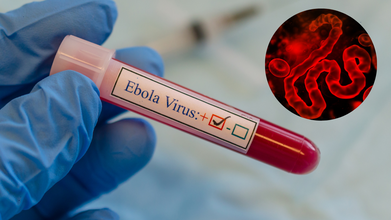
- The Science Version: It belongs to the Filoviridae family. If you look at it under a microscope, it looks like a long, tangled thread (the word "Filo" actually means thread).
- How it attacks: It basically hijacks your immune system and makes your blood vessels "leaky." This is why patients often experience bleeding.
Key Stat: The average death rate is about 50%, but in some outbreaks, it has gone as high as 90%. This is why the world takes it so seriously.
2. How does it spread? (Transmission)
This is a favorite topic for exam questions. Remember: Ebola is NOT airborne (it doesn't spread like COVID-19 or the common cold).
- From Animals (Zoonotic): It "spills over" to humans from infected animals like fruit bats, monkeys, or forest antelopes.
- Between Humans: It only spreads through direct contact with the bodily fluids (blood, saliva, sweat, etc.) of someone who is sick or has died from it.
- Contaminated Surfaces: Touching clothes or bedding used by a patient can also spread the virus.
3. History & Name Origin
- 1976: The virus was first discovered in two simultaneous outbreaks in Sudan and the Democratic Republic of the Congo (DRC).
- The Name: It’s named after the Ebola River in the DRC, which was near the village where the first cases were found.
- The Turning Point: The 2014-2016 West Africa outbreak was the largest in history. It taught the world that a local health issue can quickly become a global crisis.
4. The Six Species of Ebola
You don't need to be a doctor, but you should recognize these names for "Match the Following" questions:
- Zaire ebolavirus: The most common and most deadly.
- Sudan ebolavirus: Also very fatal.
- Bundibugyo ebolavirus: Moderately fatal.
- Taï Forest ebolavirus: Very rare.
- Reston ebolavirus: Found in pigs/monkeys; doesn't make humans sick.
- Bombali ebolavirus: Found in bats; hasn't made humans sick yet.
5. Symptoms: The "Dry" to "Wet" Phase
Doctors usually categorize the symptoms into two stages:
- The Incubation Period: 2 to 21 days. (Crucial: A person is not contagious until they show symptoms).
- Dry Symptoms (Early): Fever, muscle pain, headache, sore throat.
- Wet Symptoms (Late): Vomiting, diarrhea, rash, and the characteristic internal/external bleeding.
6. Modern Solutions (Vaccines & Treatment)
In the past, we had no defense. Now, we have tools:
- Vaccines: Ervebo is the big one. It’s a single-dose vaccine used for the Zaire strain.
- Treatments: Two drug treatments (Inmazeb and Ebanga) use "monoclonal antibodies" to help the body fight the virus. They work best when given early.
- The "One Health" Approach: This is a 2026 buzzword. It means we can't just treat humans; we have to monitor animal health and the environment to stop the virus before it jumps to people.
7. Master Points for Quick Revision
- Natural Host: Fruit bats (specifically the Pteropodidae family).
- Diagnosis: The RT-PCR test is the gold standard (just like with COVID).
- India's Status: India has had zero cases, but we keep a close eye on travelers from affected regions.
- Biosafety Level: It’s a BSL-4 pathogen (the highest danger level).
- PHEIC: The WHO can declare an outbreak a "Public Health Emergency of International Concern" to unlock global funding and help.
8. Practice Questions
Prelims Style (MCQ)
Q: Which of the following is true about Ebola?
A) It is primarily an airborne disease.
B) A person is contagious during the 21-day incubation period.
C) Fruit bats are considered the natural reservoir.
D) The Reston species is the most fatal to humans.
(Answer: C)
Mains Style (Subjective)
Q: What is the "One Health" approach, and why is it critical in managing diseases like Ebola?
(Hint: Talk about the link between deforestation, animal-to-human spillover, and the need for environmental monitoring.)
Final Mentor Tip: When writing about Ebola in exams, always mention the socio-economic impact. It doesn't just kill people; it destroys healthcare systems and halts trade, which is why global cooperation is the only real "cure."